Contact Us

The latest news and insights about Odoo Comparison

Compare Odoo with other business systems to understand fit, cost, capability, and operational impact.

Latest Updates

Odoo vs Salesforce: Costs, Features, and Fit for Australian Businesses

Choosing between Odoo and Salesforce for an Australian business comes down to one question: is your bigger constraint sales complexity or operational breadth ? Odoo is an enterprise resource planning ...

Odoo vs HubSpot: 2026 Comparison for Australian Businesses

Odoo is an open-source ERP suite with more than 80 integrated business applications, including a built-in CRM, while HubSpot is a specialised customer platform focused on marketing, sales, and service...

Odoo vs MYOB Acumatica (2026): How to Choose the Right ERP for Australian Businesses

Choosing between Odoo and MYOB Acumatica for an Australian business requires matching each platform to your operational profile, not comparing feature lists. Odoo delivers modular flexibility and expa...

Odoo vs SAP Business One: Comparison Guide for Growing Australian Businesses 2026

Odoo and SAP Business One are two distinct ERP systems for growing businesses: Odoo optimises for flexibility, lower total cost of ownership, and faster deployment, while SAP Business One prioritises ...

Odoo vs Monday.com: Which One Does an Australian Business Need?

Odoo is an open-source ERP suite. It covers accounting, inventory, manufacturing, HR, sales, and CRM on one shared database . Monday.com is a cloud Work OS built for project management, task coordinat...

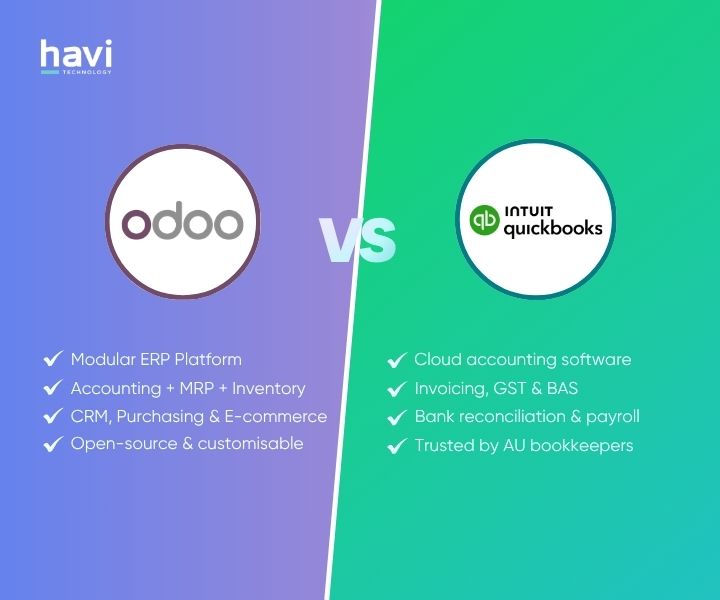
Odoo vs QuickBooks: Comparing ERP and Accounting Software for Australian Businesses

Odoo and QuickBooks are different categories of business software used at different stages of operational complexity : Odoo is a modular ERP platform connecting accounting, inventory, manufacturing, C...

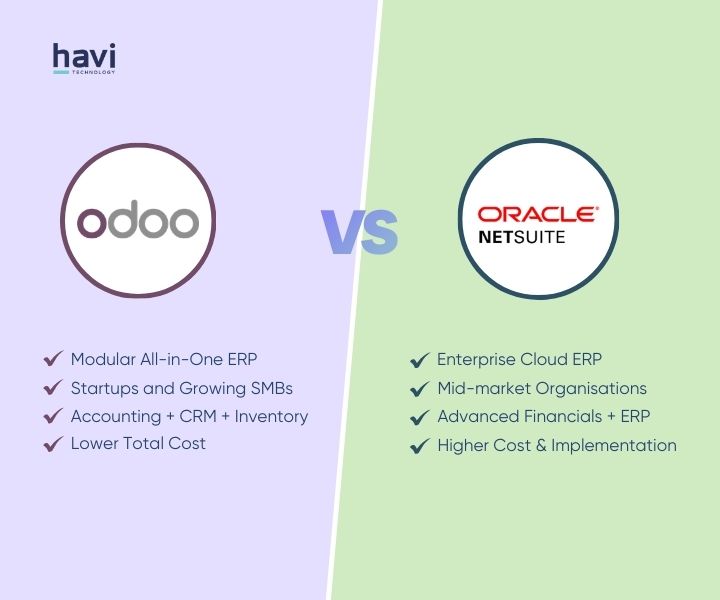
Odoo vs NetSuite: Comparing Architecture, Accounting, Inventory, AI and Pricing

Odoo and Oracle NetSuite are two widely adopted ERP platforms, but they differ significantly in architecture, pricing models, and target customers . Odoo focuses on modular flexibility, allowing compa...

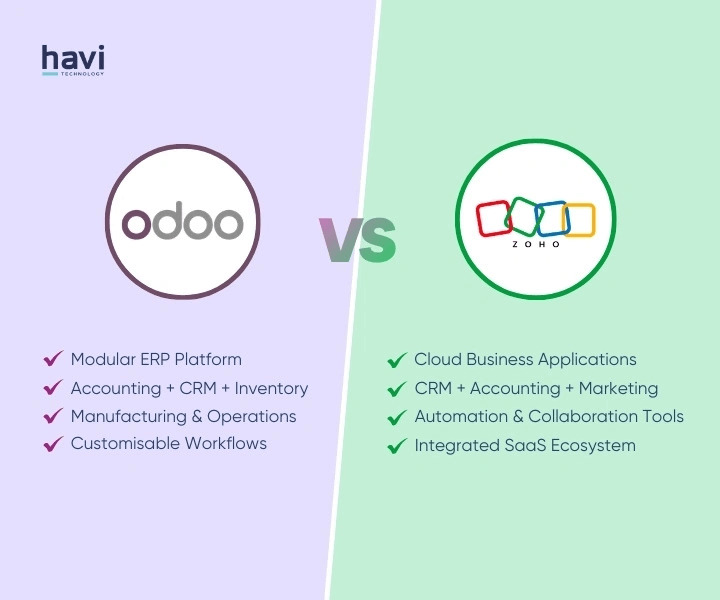
Odoo vs Zoho: Comparing Architecture, Accounting, CRM & Ops

Odoo and Zoho are two leading modular business platforms used to manage CRM, accounting, inventory, HR, and operations within a unified software ecosystem . Odoo functions primarily as a modular ERP p...

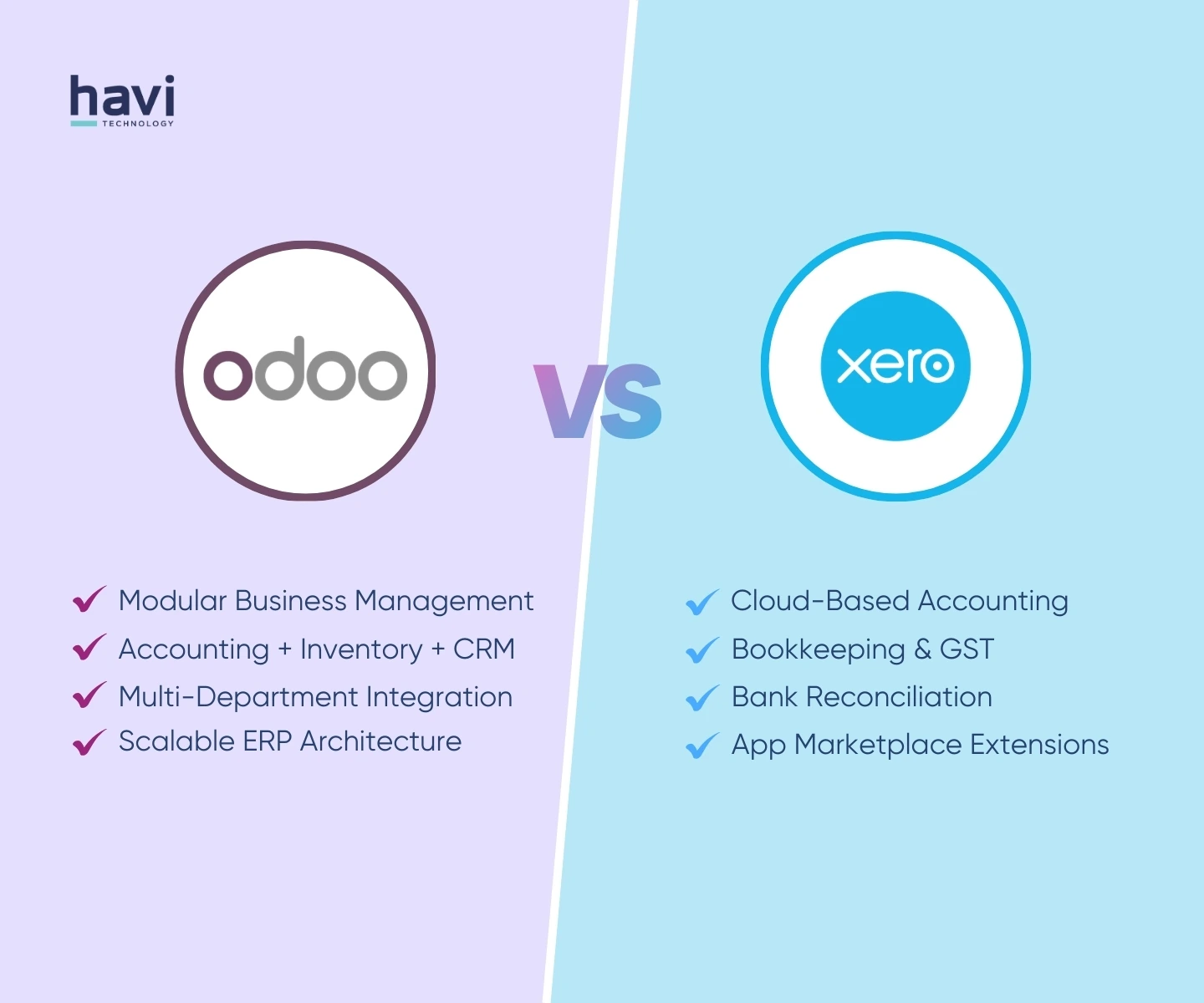
Odoo vs Xero: What’s the Difference and Which Fits Australian Businesses Better?

Odoo vs Xero compares two fundamentally different systems: Odoo is a modular enterprise resource planning (ERP) platform that integrates accounting with inventory, CRM, manufacturing, and operations i...

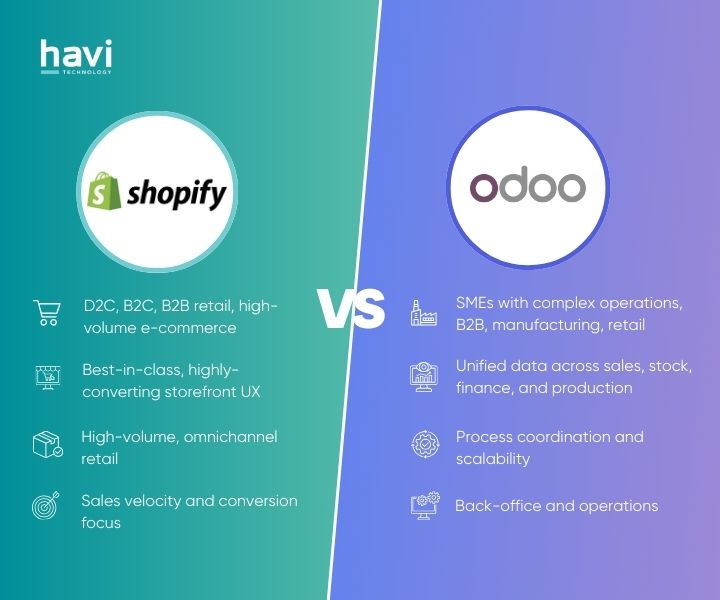
Odoo vs Shopify: Which is Better for Australian Retail and Multi-channel Operations?

Shopify and Odoo serve fundamentally different roles in retail and multi-channel operations . Shopify enables businesses to launch and optimise high-converting online storefronts quickly, while Odoo f...

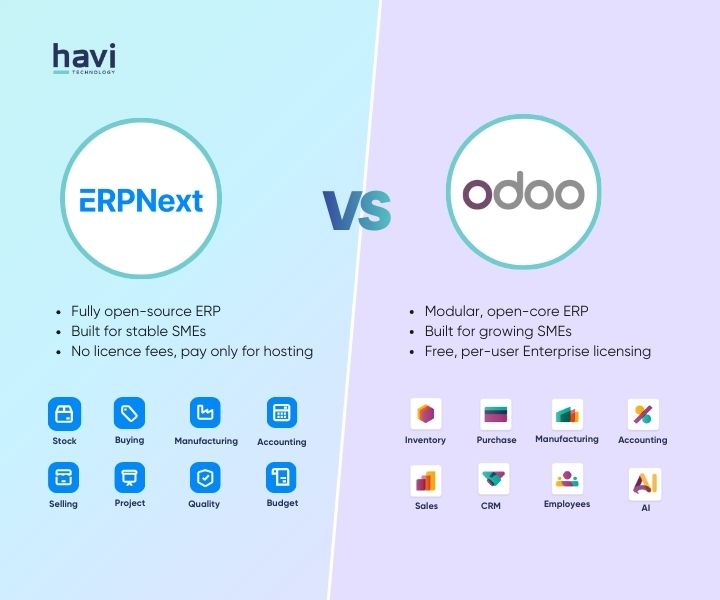
ERPNext vs Odoo: Key Differences and Which ERP Fits Australian SMEs

ERPNext and Odoo are both open-source ERP platforms, but they serve small and medium businesses (SMEs) in fundamentally different ways . ERPNext prioritises simplicity, transparency, and cost control ...